I’ve seen it happen maybe fifty times.
A buyer sends the same STEP file to five suppliers. Three days later, quotes land in their inbox. $3,200, $6,800, $9,500, and $12,800. Same part. Same material. Same quantity.
And the buyer — smart person, good engineer — stares at the spreadsheet thinking: “Is the $3,200 guy cutting corners, or is the $12,800 guy just greedy?”
Here’s the uncomfortable truth: both could be true. Or neither. A mold quote without a line-item breakdown is just a number with a handshake. And if you’re comparing numbers without comparing what’s inside them, you’re not comparing quotes — you’re comparing sales skills.
Let me walk you through how to actually read these quotes. The way someone who builds molds for a living reads them.
First: throw out the bottom quote.
I don’t care how tempting it looks. If four quotes cluster around $6,000–$10,000 and one comes in at $3,200, there are exactly three explanations:
- They’re using a lower grade of steel and hoping you won’t notice.
- They’re skipping DFM entirely. Building straight from your CAD, problems and all.
- They’re a
They’re a trading company subcontracting to a workshop that quoted them $2,800 — and you’ll never know who actually cut your steel.
None of these end well. The $3,200 mold that needs $4,000 in modifications six months later isn’t cheap — it’s a $7,200 mold with a six-month delay and a ruined relationship with your production team.
What a real mold quote should include
When I send a quote, it’s typically three pages. Not because I like paperwork — because a mold has a lot of decisions baked into it, and if those decisions aren’t on paper, they’ll become arguments later.
Here’s the minimum you should see in any serious quote:
1. Steel type, brand, and hardness. Not just “P20.” ASSAB 718HH, HRC 34-36. If the quote says “mold steel” without a grade, they’re either hiding something or they don’t know what they’re using. Neither inspires confidence.
2. Cavity count and layout. 1+1 or 2+2? Family mold or dedicated? This determines your cycle time and your cost per part. A 1+1 mold might cost less upfront but produce half as many parts per hour. Do the math: if the part runs 500,000 shots per year, a 2+2 mold at $9,500 is cheaper per part than a 1+1 at $6,000.
3. Mold base size and brand. A Hasco or DME standard mold base costs more than a generic Chinese equivalent. But six years from now, when you need a replacement ejector pin, you’ll be glad the mold base follows a standard catalog. Generic mold bases save money today and cost money every time something breaks.
4. Hot runner or cold runner, and which brand. A quote that says “hot runner” without specifying YUDO, HRS, Mold-Masters, or Synventive is a quote with an unknown cost hiding inside it. The hot runner system alone can be 20-30% of the total mold cost. If the supplier won’t name the brand, they’re going to install the cheapest one they can find — and you’ll pay for it in downtime.
5. Estimated cycle time. This one separates serious suppliers from the rest. A quote that includes cycle time is from someone who’s actually simulated the part. A quote without it is from someone who’s guessing. And guess what happens when the mold arrives and the cycle is 22 seconds instead of the 15 you budgeted for? Your part cost just went up 47%.
6. Mold life warranty. Not “we guarantee quality” — actual numbers. 300,000 shots? 500,000? One million? And what’s covered? Cavity wear? Ejector pin failure? Hot runner malfunction? If these aren’t in writing, they don’t exist.
7. Deliverables included. Does the quote include a mold trial report? A spare parts kit? Electrode drawings? A full set of 2D/3D drawings? These aren’t “nice to have.” They’re what allows your local toolroom to maintain the mold for the next decade without shipping it back to China every time an insert wears.
The biggest pricing traps nobody warns you about
Trap #1: The “mold only” quote. Some suppliers quote the mold without trial, without optimization, without documentation. The number looks great. But when the mold arrives and doesn’t produce acceptable parts on your machine, you discover the quote was for a metal object, not a production tool. A
Some suppliers quote the mold without trial, without optimization, without documentation. The number looks great. But when the mold arrives and doesn’t produce acceptable parts on your machine, you discover the quote was for a metal object, not a production tool. A plastic injection molding China supplier who includes mold trial, process optimization, and full documentation in the quote isn’t being expensive — they’re being honest about what it takes to deliver a working mold.
Trap #2: The re-quote trick. Quote comes in at $5,000. You ask for a small change — maybe a different gate location, maybe a texture on one surface. Suddenly the quote is $7,200. Why? Because the first quote was a minimum viable version designed to win the spreadsheet comparison. The real mold cost was always $7,200. The $5,000 was bait.
Trap #3: The mystery material. Some quotes specify a steel grade but not a brand. P20 from Baosteel and P20 from ASSAB are both P20. They are not the same steel. Hardness consistency, impurity levels, and polishability differ. A mold factory that specifies both grade and brand on every quote is telling you they have nothing to hide. One that doesn’t is betting you won’t ask.
How to compare quotes like an engineer
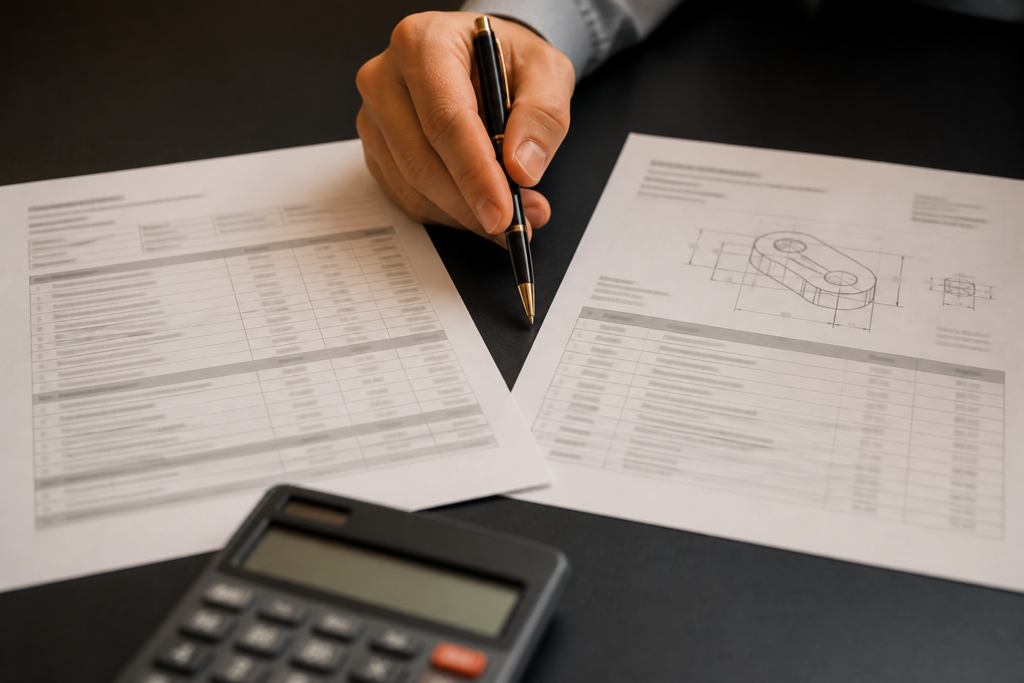
Don’t put quotes side by side by total price. Build a comparison table with these seven rows instead:
Pull the totals out of your spreadsheet and throw them away. Now compare line by line.
| What to compare | How to score it (1-10) |
| Steel grade and brand specified? | 10 = ASSAB/Buderus with HRC range; 5 = “P20” only; 1 = “mold steel” |
| DFM included and timeline stated? | 10 = DFM within 24h, sample report available; 3 = “after order” |
| Mold base standard specified? | 10 = Hasco/DME/Futaba; 5 = Chinese standard; 1 = not specified |
| Hot runner brand named? | 10 = YUDO/HRS/Mold-Masters; 3 = “hot runner included” |
| Cycle time estimated? | 10 = includes cooling/filling analysis; 1 = not mentioned |
| Mold life warranty in shots? | 10 = specific number with coverage; 3 = “quality guaranteed” |
| Deliverables listed? | 10 = trial report + spare parts + electrodes + drawings; 5 = mold only |
| After-sales terms clear? | 10 = modification process and turnaround stated; 1 = not mentioned |
Add up the scores. That $9,500 quote that scored 85/100 is probably a better deal than the $6,800 quote that scored 42/100. The price difference is $2,700. One unplanned mold modification will cost you more than that.
One last thing
The cheapest mold I ever saw a buyer purchase cost $4,200. It produced parts for about three months before the ejector pins started galling. The buyer spent $3,800 on repairs, lost six weeks of production, and eventually paid $9,500 for a replacement mold from a different supplier.
Total cost: $17,500 and a very uncomfortable conversation with their production manager.
The mold you don’t buy is sometimes the best investment you’ll make all year.
Next time those quotes land in your inbox, don’t scroll to the bottom line. Scroll to the line items. That’s where the real quote is hiding.
Need help reading a quote you received? Reach out through www.kysenmold.com. We review competitor quotes for free — even if you don’t end up working with us. Because honestly, the industry needs fewer buyers getting burned by bad quotes.
————————————————————————————————————————
Author: Jack Qiao runs engineering projects at Kysen Mold, a Shanghai-based injection mold manufacturer. He has reviewed over 400 mold quotes in the last three years — both his own and competitors’. The company operates a 1,120 sqm facility with ISO 9001 certification.
Website: www.kysenmold.com